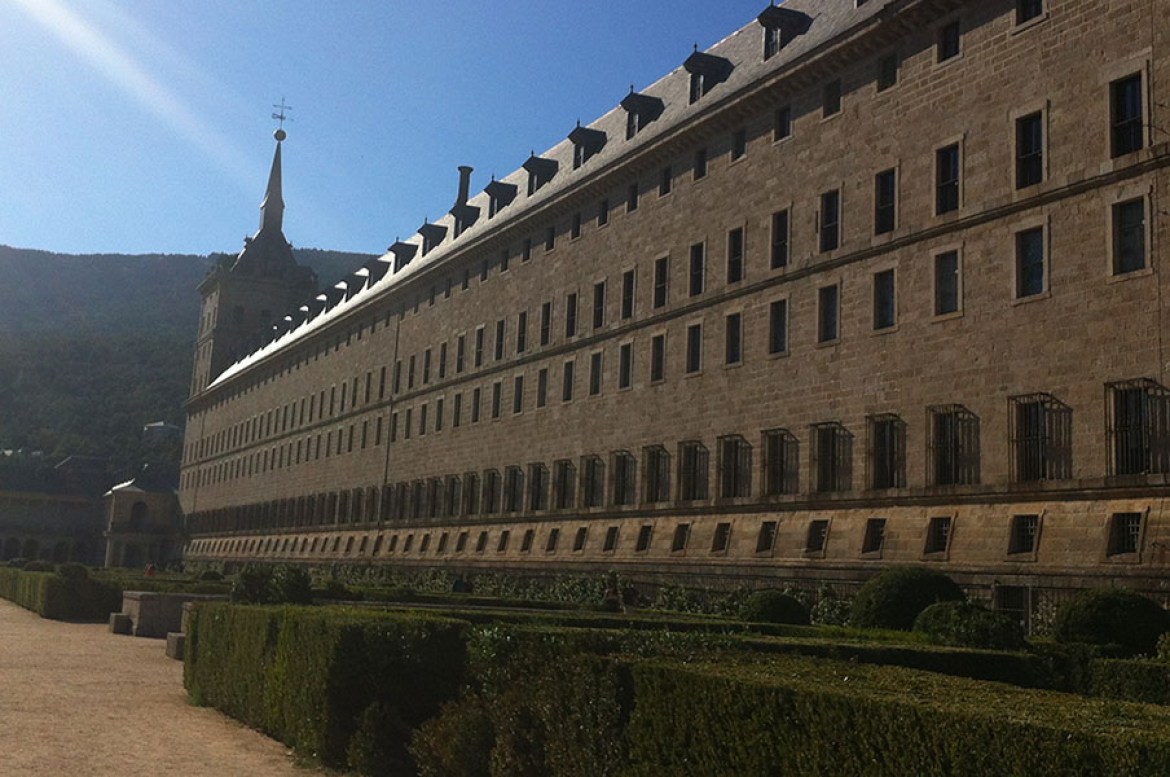
It was considered, since the end of the 16th century, the Eighth Wonder of the World, because of its size and functional complexity and because of its enormous symbolic value. Its architecture marked the passage of the Renaissance Plateresque to the unornamented classicism. An enormous work, of great monumentality, is also a receptacle of the other arts.
In 1561 Philip II decided to build a monastery in honor of St. Lawrence. It was devised in the second half of the sixteenth century by the king and his architect Juan Bautista de Toledo.
His paintings, sculptures, chancels, parchments, liturgical ornaments and other sumptuous, sacred and aulic objects make El Escorial a museum too. His complex iconography and iconology has deserved the most varied interpretations of historians, admirers and critics. The Escorial is the crystallization of the ideas and the will of its impeller, King Philip II, a Renaissance prince.
The visit will include several places full of history such as the Library, covered by frescoes of the vault, by Pellegrino Tibaldi, and the impressive collection of ancient books and engravings. On the other hand, in the Palace of the Bourbons they emphasize the tapestry (some of Goya) and the collection of clocks. The Palace of Philip II (or Palace of the Austrias) you can visit the Hall of Battles with frescoes of historical wars, chair-litter in which they transported Felipe II from Madrid before dying, marquetry doors gift of Maximilian II, painting Landscape with San Cristobal and the Child by Joachim Patinir, as well as the series of portraits of the Austrias. The Basilica: Courtyard of the Kings, interior of the main vault with frescoes by Luca Giordano, vault of the choir with frescos by Luca Cambiaso, the Altar and the sacristy, with paintings by Ribera, El Greco, Zurbarán or Tiziano.
In the Pantheon of the Kings (or Royal Crypt) you will see urns with the mortal remains of 26 kings and queens of Spain. In the Convent: the main staircase of the cloister, with frescoes by Tibaldi, Giordano and Cambiaso, and the Old Church, which features a second version of the Martyrdom of St. Lawrence of Titian. In the Capitular Rooms: numerous relevant paintings, such as La Túnica de San José de Velázquez, San Jerónimo and The Last Supper of Titian or the Martyrdom of San Sebastián de Van Dyck. There are also paintings by Tintoretto, Veronese, El Bosco, etc. Museum of architecture: 11 rooms that show the history of the construction of the Monastery. Garden of the Friars to finish the day with a little relax.
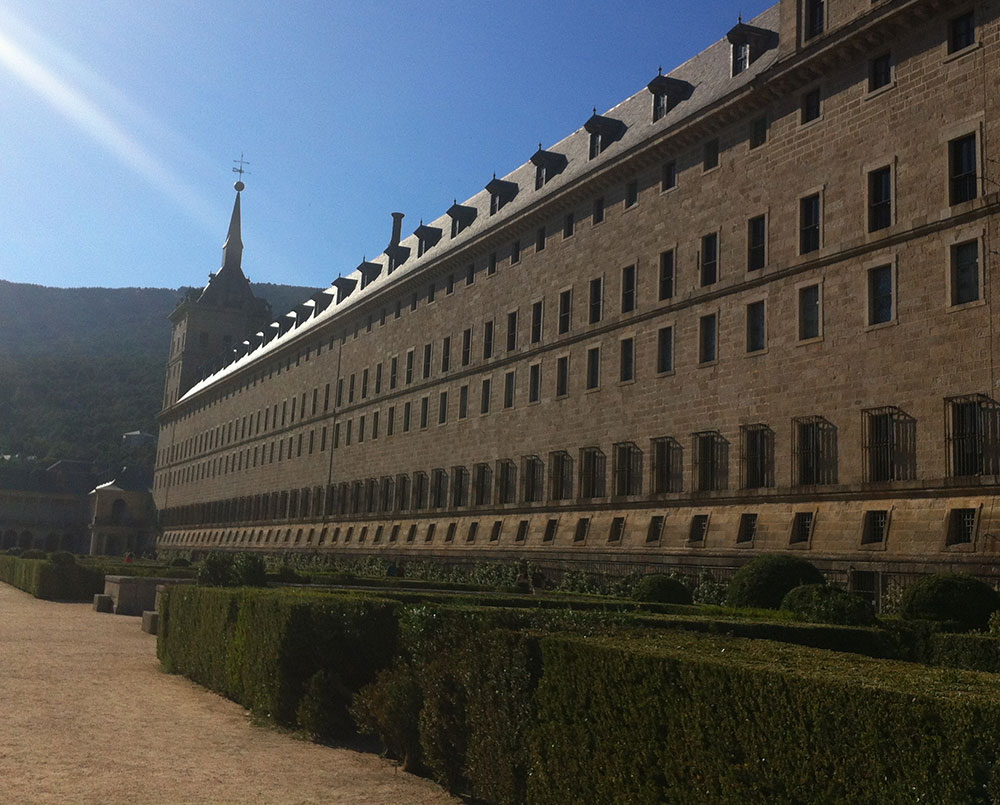
SCHEDULE
Winter (October to March). Tuesday to Sunday: 10:00 a.m. to 6:00 p.m.
Summer (April to September). From Tuesday to Sunday: 10:00 a.m. - 8:00 p.m.
Close lockers and access Monastery one hour before
Weekly closing: Monday
Days closing 2017
Approximate duration of the visit to the Monastery: Free visit: two hours.
PRICES
Individual rate> Basic Rate € 10